
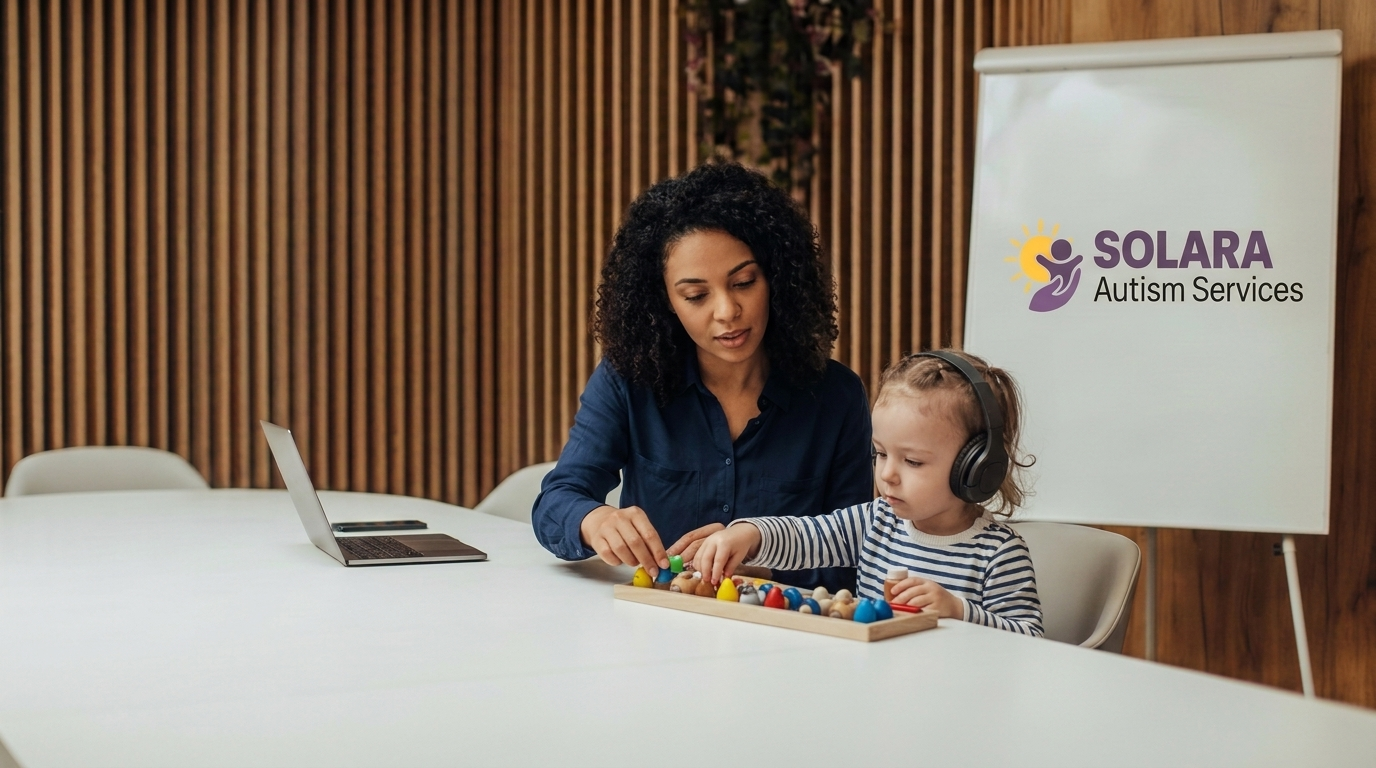
Where children practice connection in real time.
Some skills can’t really be taught in 1:1 therapy — they only show up in groups. How to start a conversation with another kid. How to notice when someone’s losing interest. How to handle disagreement without melting down. How to share, compromise, and recover when something feels unfair.
Solara’s social skills groups give children a safe, structured space to practice all of it. Small groups, careful facilitation, and real peer interaction — not role-play with adults, but actual connection with other kids working on the same things.
The real-world skills that make friendship possible.
Every group has individualized goals, but most kids work on some combination of these four areas — through real interaction.
Peer Interaction
Starting conversations, joining play, and handling moments when things don’t go their way.
Conversation Skills
Turn-taking, asking questions, staying on topic, listening — and noticing when someone’s bored.
Reading Social Cues
Facial expressions, tone of voice, body language — the unspoken stuff that most kids pick up naturally but autistic kids often don’t.
Group Cooperation
Sharing, compromise, working through frustration, and recovering from a tough moment.
Built for kids who want connection.
Social skills groups are a strong fit for children who do well in 1:1 therapy but struggle around peers, who want friends but find peer interactions confusing, or who are preparing for a transition into a more social environment.
If you’re not sure whether a group is the right fit — or whether your child is ready — talk to us. We’ll figure it out together.
Small, intentional, real.
Every group is structured but flexible. Kids get clear guidance — but there’s also room for the unscripted moments where real social learning actually happens.
Small group size
Three to six children per group, so every child gets attention and real opportunities to engage.
Matched by age and fit
Children are grouped by age and developmental match — not just lumped together.
Weekly Support Sessions
Consistent weekly meetings build trust between kids and create real continuity from week to week.